10 ideas for vegetable protection:
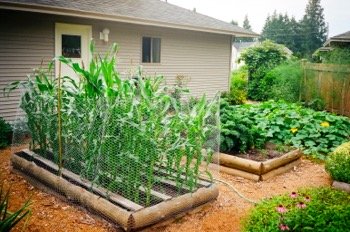 Chicken wire protecting my corn.
Vegetable protection is an important aspect to consider in your garden planning. Protection is often needed when setting out your transplants to keep them warm in cool temperatures or shaded from direct heat depending on the vegetable and the growing conditions. Pests and disease can wreak havoc in your garden and different forms of protection can keep your veggies happy and healthy.
To ensure your plants are safe from heat, cold, frost and pests use the following list of vegetable protection ideas. Learn more about starting your vegetable seeds and transplants.
1. Cardboard box
Cut the bottom on 3 sides so it can be opened during the daylight hours.
Place the box upside down on the plant.
Protects from the cold, heat, bugs and birds.
2. Metal cans Cut both ends out of the can, large coffee can is great. Push it into the soil around the plant. Will keep out pests and protect from wind and cold.
3. Piece of wood Prop up a piece of board or shingle to shade seedling from heat. Use this to protect young transplants if planted on a sunny day.
4. Paper bags Cut the bottom out of the paper bag. Push 4 stakes into the ground around the plant staple the bag to the stakes Will protect your plants from wind, cold and heat.
5. Plastic containers Cut out the bottom and cut off the handle of a plastic milk jug. Place a stake through the handle hole to secure it to the ground. Do not use plastic container in hot weather. Will protect seedlings from the wind, cold, slugs and birds.
6. Cloth sheets Use old bedding or curtains to cover the plants, removing during the day. These are light weight so will not harm the plants Secure the corners of the cloth with rocks or soil Will protect plants from cold and frost
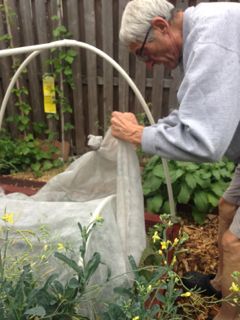 Covers used to protect veggies.
7. Tarpaper or carpet collars Cut the tarpaper or carpet into 3 inch squares. Now cut the square on one side so you can slip it around the base of the plant.This will help prevent cabbage root maggots and cutworms from climbing on to the plant.
8. Remay
 Remay covering rows of peas to protect them from birds.
- Remay is a lightweight fabric used to protect seedlings from the cold, heat and insects.
- This will protect your vegetable transplants from flea beetles, aphids, thrips, cabbage worm butterflies, carrot rust fly, and cabbage root maggot flies.
- It can lay directly over the plant or attached to plastic pipe to make a mini greenhouse.
9. Plastic sheeting can be placed over or attached to a wood or plastic pipe framing. Make sure you open it up during the day as it may get too warm. Used to protect plants from cold and frost.
10. Fencing Will keep animals out of your garden - deer, raccoons, cats, dogs, rodents for example. Wood, electric, metal, and wire are some examples of fencing.
Return from Vegetable Protection to Vegetable Gardening Tips Return to homepage
